






RESEARCH
Building an ecological theory of complex living systems
Our research aims to develop an ecological theory of complex living systems, uncovering organizing principles that govern natural and human-dominated systems alike, and cross-pollinating these principles across disparate domains for unexpected discoveries.
Drawing from biogeochemistry, theoretical ecology, and complexity science, our work integrates the power of data-mining, fieldwork, and remote sensing to feed into our theoretical quest for transferable organizing laws.
Research themes
Belowground ecology: from root traits to global biogeochemistry
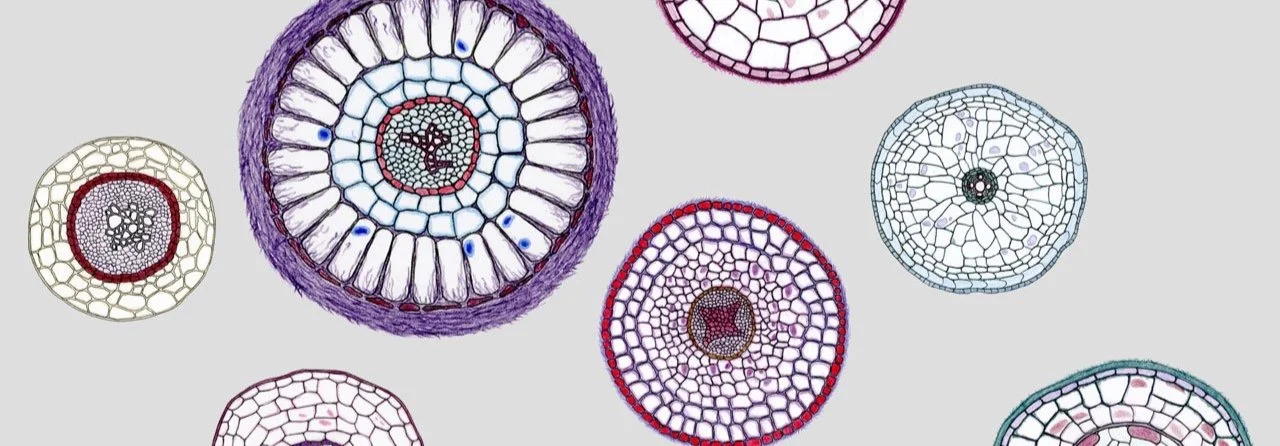
Cross-sections of first-order roots. Photo credit: Zeqing Ma
Selected relevant publications:
- Zhang, Y., Cao, J., Lu, M., Kardol, P., Fan, G., Kong, D. (2023). “Origin of bi-dimensionality in plant root traits.” Trends in Ecology and Evolution. Link
- Lu, M.*, Wang, S., Malhotra, A., Tumber-Dávila, S.J., et al. (2022). “A continental scale analysis reveals widespread root bimodality.” bioRxiv. Link
- Lu, M.*, Bond, W.J., Sheffer, E., Cramer, M.D., West, A.D., et al. (2022). “Biome boundary maintained by intense belowground resource competition in world’s thinnest-rooted plant community.” PNAS, 119(9). Link
- Lu, M.* & Hedin, L.O. (2019). “Global plant-symbiont organization and emergence of biogeochemical cycles resolved by evolution-based trait modelling.” Nature Ecology & Evolution 3(2): 239–50. Link
- Ma, Z.*, Guo, D.*, Xu, X., Lu, M., Bardgett, R.D., et al. (2018). “Evolutionary history resolves global organization of root functional traits.” Nature 555: 94–97. Link
Ecological regime shifts and hidden feedbacks
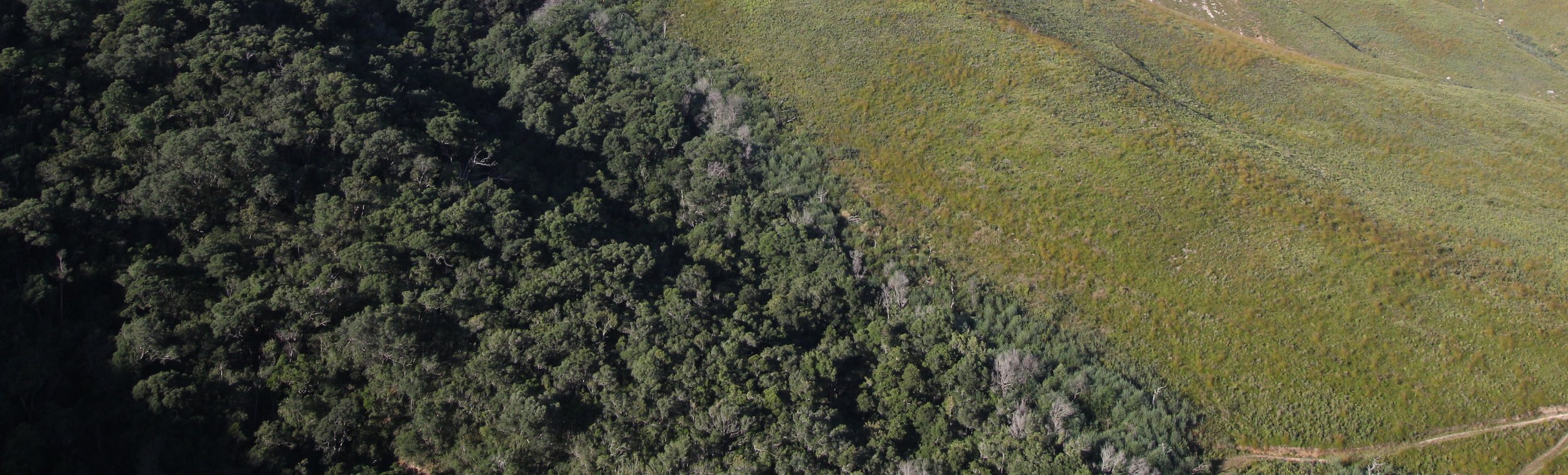
Relevant publications:
- Liao, J.†, Lu, M.*, Gu, H., Wang, J., Jing, X., He, J-S. (2023). “Warming-induced shifts on Tibetan Plateau: the overlooked ants and their ecological impacts.” Landscape Ecology (†graduate student advisee). Link
- Vasconcelos, V.V.*, Marquitti, F.M.D.*, Ong, T.*, McManus, L.C.*, et al. (2023). “Rate-Induced Transitions in Networked Complex Adaptive Systems.” arXiv:2309.07449.
- Lu, M.*, Bond, W.J., Sheffer, E., et al. (2022). “Biome boundary maintained by intense belowground resource competition in world’s thinnest-rooted plant community.” PNAS, 119(9). Link
Urban-system science: an ecosystem perspective
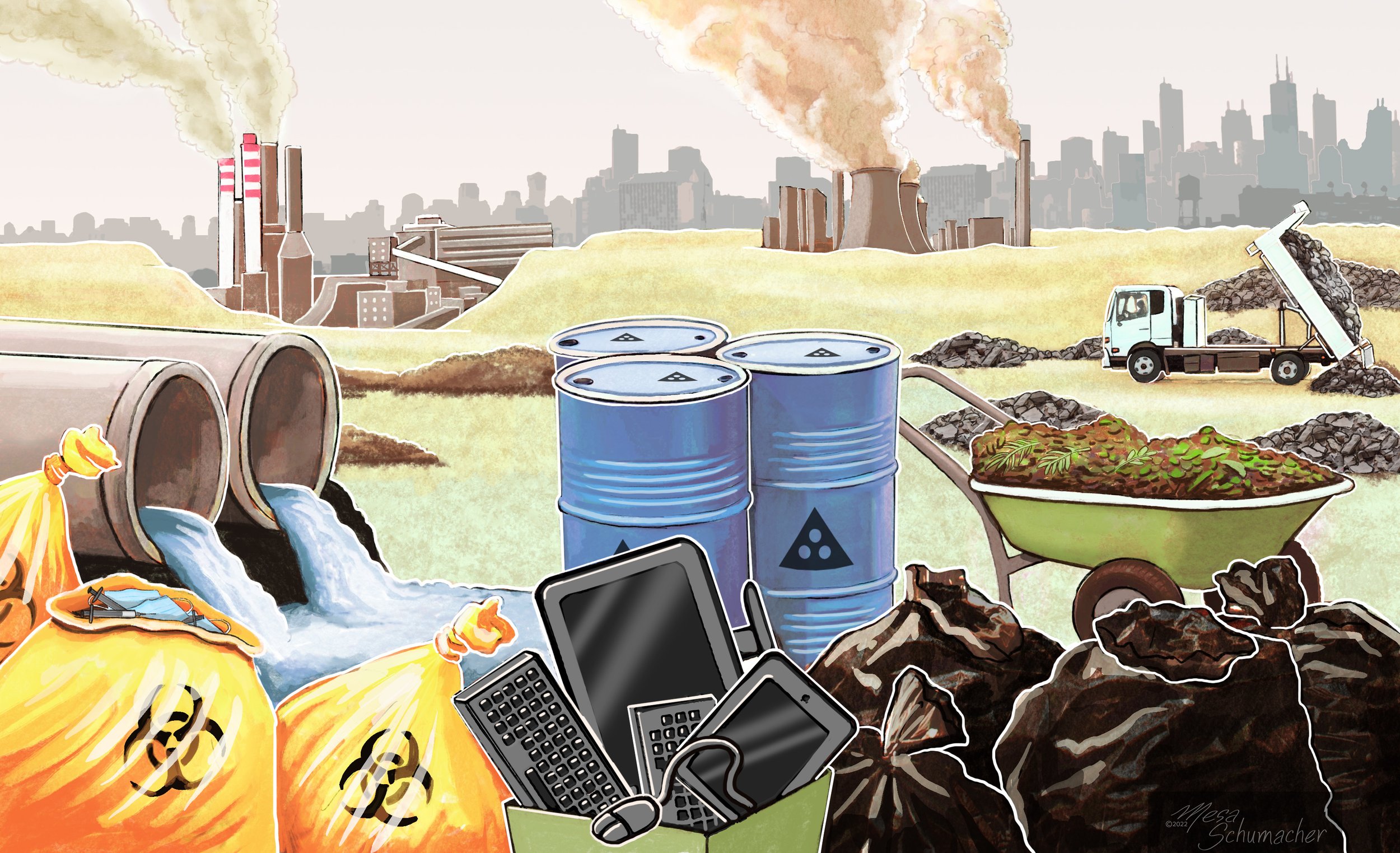
Companion site: nested-complexity.net — interactive exploration of nested scaling in city mass, accompanying Huang & Lu (2025).
Relevant publications:
- Huang, K. & Lu, M.* (2025). Nested economies of scale in city mass. arXiv.
- Hsu, Y.H., Beery, S., Kempes, C.P., Lu, M., Saavedra, S. (2025). The impact of COVID-19 on building energetics. arXiv preprint arXiv:2504.19921.
- Ma, S., Lu, M., Yang, G., Zhi, Y., Ouyang, Z., Huang, N., Zhou, C.* (2024). “Carbon-negative transition by utilizing overlooked carbon stock of landfills.” The Innovation Geoscience.
- Lu, M.*, Zhou, C., Wang, C., Jackson, R.B., Kempes, C.P.* (2024). “Worldwide scaling law of waste production in urban systems.” Nature Cities, 1, 126–135.